English
 العربية
 Español
 Deutsch
 Русский
 Italiana
What EU Buyers Expect from Pickled Vegetable Suppliers
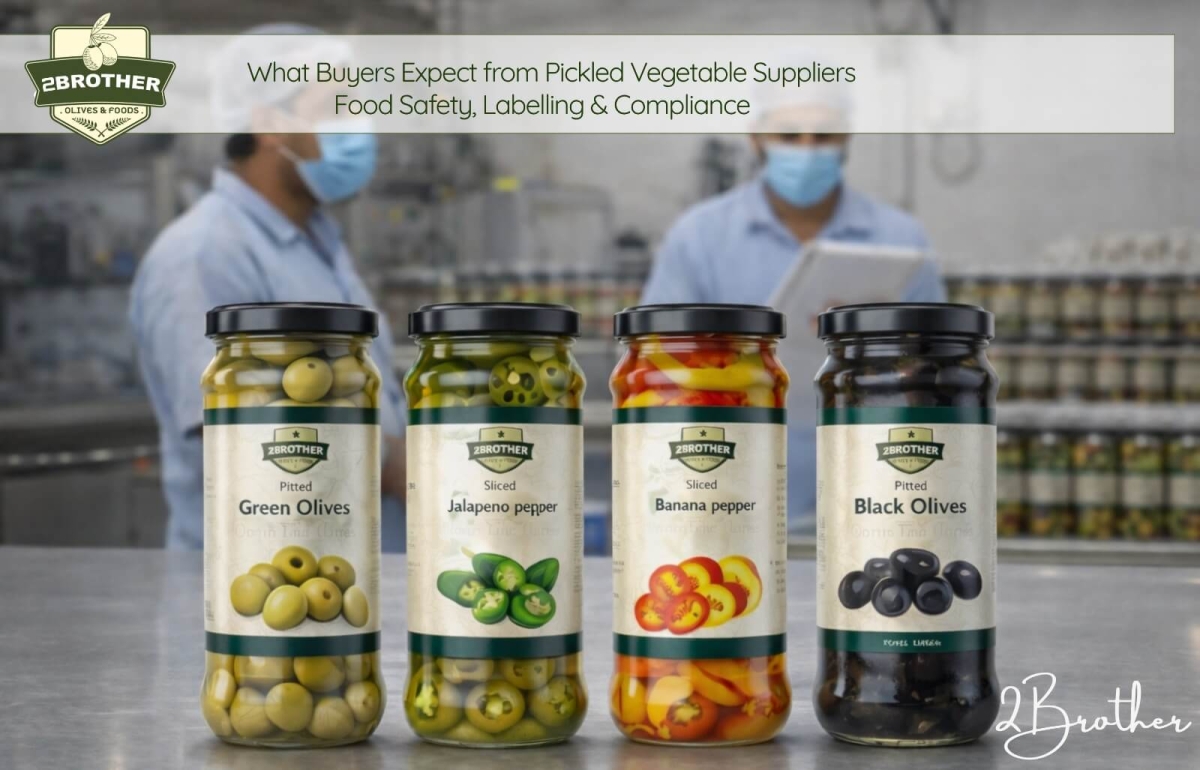
What EU Buyers Expect from Pickled Vegetable Suppliers: Food Safety, Labelling, and Compliance
For EU buyers, sourcing pickled vegetables is not only about product taste, price, or packaging. In most cases, the first real question is much simpler: Can this supplier support the market properly?
Importers, distributors, wholesalers, and private label buyers across Europe usually evaluate pickled vegetable suppliers through a mix of commercial and compliance criteria. They want products that are safe, properly labelled, consistent in quality, and supported by a supplier who understands how the EU market works.
That is why food safety, labelling, and compliance are not side issues. They are often part of the supplier selection process itself.
Quick answer: what do EU buyers want from pickled vegetable suppliers?
In practical terms, most EU buyers want to know five things before moving forward:
- whether the product is prepared according to EU food safety expectations
- whether labelling can be adapted correctly for the target market
- whether the supplier understands documentation and traceability
- whether packaging and product presentation are commercially suitable
- whether the company looks reliable enough for long-term supply
For many buyers, this is not just about avoiding regulatory problems. It is also about reducing commercial risk.
Why food safety matters so much in the EU market
The European market is highly structured when it comes to food. Buyers do not only assess what the product is. They also assess how it is made, how it is controlled, and whether the supplier appears capable of supporting a stable import process.
For pickled vegetables, food safety is especially important because buyers often expect a supplier to show consistency not only in the final product, but also in the process behind it.
From a buyer’s perspective, strong food safety standards usually suggest:
- better production control
- lower supply risk
- more stable product quality
- easier onboarding into retail, wholesale, or private label channels
- greater confidence in long-term cooperation
In other words, food safety is not only a technical requirement. It is part of supplier credibility.
What food safety buyers usually expect from a pickled vegetable supplier
When EU buyers evaluate a supplier, they often do not start by reading laws. They start by asking whether the supplier looks operationally ready.
For pickled vegetables, this usually means the supplier should appear able to support:
1. Consistent product quality
Buyers want to feel that the product will remain stable from batch to batch. A supplier that looks inconsistent creates hesitation, especially in wholesale, retail, and private label projects.
2. Controlled production and handling
Pickled vegetables are judged not only by flavour or appearance, but also by how controlled the production process seems. Buyers usually trust suppliers more when the process looks structured and disciplined.
3. Suitable packaging for the target channel
Food safety and packaging are connected. Buyers want to know that the packaging format is appropriate for storage, transport, and the final sales channel.
4. Clear communication around product information
A professional supplier should be able to communicate product details, handling logic, and market readiness clearly and confidently.
5. Supplier readiness for the EU market
Many buyers assess whether the company feels like a real export partner or simply a product seller. This difference matters a lot in supplier selection.
Why labelling matters more than many suppliers expect
Labelling is one of the fastest ways buyers judge whether a supplier understands the EU market.
For pickled vegetables, proper labelling is not just a technical requirement. It affects:
- market entry readiness
- private label suitability
- retail acceptance
- importer confidence
- overall supplier professionalism
If labelling looks incomplete, unclear, or difficult to adapt, buyers often assume the supplier may create more work later.
That is why strong suppliers usually make it easier for buyers to understand:
- what the product is
- how it should be presented
- whether label adaptation is possible
- whether the product can fit different EU market needs
For private label buyers especially, labelling readiness is a strong signal of supplier maturity.
Compliance is not just a legal issue. It is a buying issue.
One of the biggest mistakes suppliers make is thinking compliance only matters once the shipment is ready.
In reality, EU buyers often judge compliance much earlier. They judge it through:
- product pages
- packaging clarity
- website structure
- FAQs
- documentation readiness
- how clearly the supplier explains the product and process
That means compliance affects conversion, not just customs.
A buyer who feels uncertain about documentation, packaging, or supplier discipline is much less likely to move forward, even if the product itself looks attractive.
What importers and distributors in Europe look for beyond the product
For buyers in Europe, especially those working in import, distribution, or private label, the product is only part of the decision.
They also want to know:
Is the supplier easy to work with?
A supplier with clear communication, structured pages, and well-prepared product information reduces friction.
Does the supplier understand the target market?
EU buyers usually respond better to suppliers who understand market expectations rather than offering a one-size-fits-all export approach.
Can this supplier support commercial growth?
For many buyers, the ideal supplier is not just compliant. It is a supplier that also supports packaging fit, private label opportunities, and repeatable business.
Does the supplier feel low-risk?
In many cases, this is the real buying question. Buyers are often not choosing between “good” and “bad” products. They are choosing between “higher risk” and “lower risk” suppliers.
Common mistakes pickled vegetable suppliers make when targeting the EU
Many suppliers lose opportunities not because the product is weak, but because the commercial presentation feels incomplete.
Common mistakes include:
- treating food safety as an internal topic instead of a buyer concern
- giving very general quality claims without showing process readiness
- not explaining packaging formats clearly
- making labelling seem like the buyer’s problem
- using product pages that describe the product but do not support evaluation
- failing to connect compliance with trust
In a market like Europe, buyers often expect the supplier to make the sourcing decision easier, not more complicated.
How pickled vegetable suppliers can position themselves better for EU buyers
If the goal is to win more importers, distributors, or private label customers in Europe, the offer should answer commercial questions before the buyer needs to ask them.
A stronger supplier position usually includes:
- clear product pages with market-ready information
- visible packaging options
- clear explanation of production and handling
- signs of process control and consistency
- stronger communication around export readiness
- easy paths to request quotations or more information
This is where food safety, labelling, and compliance become commercial tools, not just technical topics.
Why this matters even more for private label projects
Private label buyers are usually stricter when evaluating suppliers. They are not only buying a product. They are choosing a manufacturing partner that will sit behind their brand.
That means they usually care more about:
- consistency
- documentation discipline
- packaging suitability
- labelling flexibility
- long-term reliability
- reduced operational risk
For this reason, suppliers who present food safety and compliance well are often better positioned for private label opportunities.
Final thought
For EU buyers, pickled vegetables are not evaluated only by product appearance or pricing. They are evaluated through the full supplier picture: safety, structure, packaging, label readiness, and overall reliability.
The suppliers that stand out are usually not the ones making the biggest claims. They are the ones that make buyers feel confident that the product, the process, and the commercial setup are ready for the European market.
That is what many buyers really expect from a pickled vegetable supplier.
Looking for a supplier prepared for EU market expectations?
If you are sourcing pickled vegetables for wholesale, retail, foodservice, or private label in Europe, working with a supplier that understands food safety, labelling, packaging, and compliance can make the process smoother and more reliable.
Contact us to discuss suitable product formats, packaging options, and supply models for your market.
FAQ: What EU Buyers Expect from Pickled Vegetable Suppliers
Why do EU buyers care so much about food safety in pickled vegetables?
Because food safety is directly linked to supplier reliability, market readiness, and reduced commercial risk.
Is labelling really that important for pickled vegetable suppliers?
Yes. Labelling affects market entry, retail suitability, private label readiness, and buyer confidence.
What does compliance mean to an EU importer?
It means the supplier looks prepared to support the market properly through structured product information, packaging, documentation, and process discipline.
What do private label buyers expect from a pickled vegetable supplier?
They usually expect consistent quality, packaging flexibility, label readiness, and a supplier that can support long-term brand projects.
What makes one supplier look stronger than another?
Usually it is not only the product. It is how clearly the supplier communicates product readiness, packaging options, food safety logic, and export capability.
What should a pickled vegetable supplier show on the website?
Clear product information, packaging formats, private label options, process credibility, and an easy path for inquiry or quotation requests