English
 العربية
 Español
 Deutsch
 Русский
 Italiana
Clean Label & Low Salt Trends in Northern Europe Food Markets
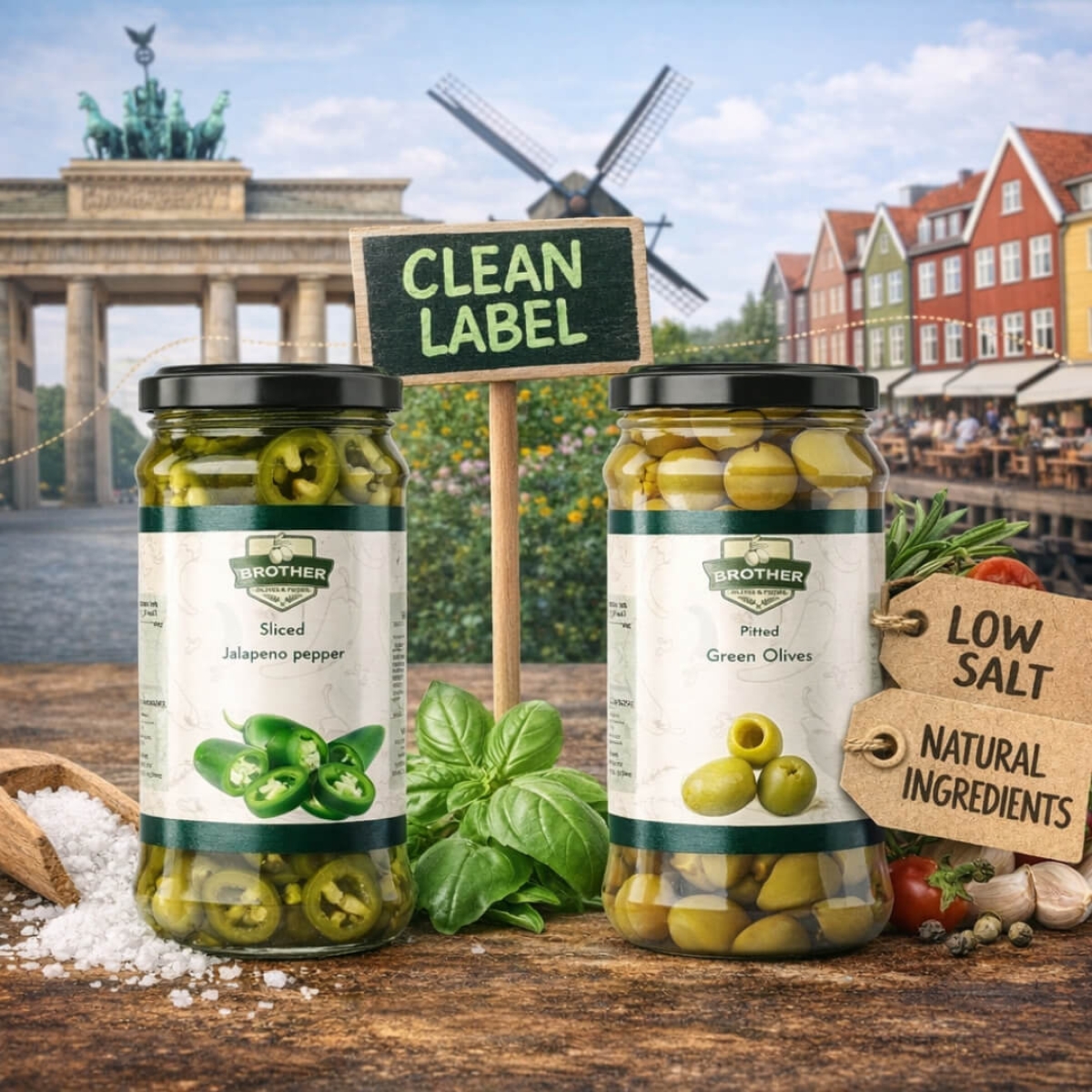
Clean Label & Low Salt Trends in Northern Europe
Across Northern Europe, food trends are increasingly shaped by consumer awareness and changing dietary preferences. Among the most noticeable shifts in recent years is the growing demand for clean label products and reduced salt formulations.
For food manufacturers, importers, and distributors, these trends are no longer optional. They are becoming key factors in product selection, sourcing strategies, and long-term supply decisions.
What Does “Clean Label” Mean in Today’s Market?
In Northern European markets, clean label goes beyond marketing claims. It reflects a broader shift toward transparency and simplicity in food production.
Buyers and consumers are increasingly focused on:
-
short and clear ingredient lists
-
reduced use of additives
-
recognizable raw materials
-
transparent production processes
This is particularly relevant for categories like olives and pickled vegetables, where traditional processing methods are now being re-evaluated.
Low Salt as a Market Requirement
Reducing sodium content has become a priority across many food categories.
In markets such as Germany, the Netherlands, and Scandinavia, buyers are actively looking for:
-
reduced salt formulations
-
balanced flavor profiles
-
compliance with health guidelines
-
products adapted to modern dietary preferences
This trend is influencing product specifications at both retail and foodservice levels.
What Importers and Buyers Are Looking For
As demand evolves, importers and distributors are increasingly selecting suppliers based on their ability to meet new product expectations.
Key requirements often include:
-
clean label formulations
-
flexible salt levels depending on market needs
-
consistent product quality across batches
-
reliable large-scale supply
-
adaptability for private label programs
Suppliers who can meet these criteria are more likely to build long-term partnerships in Northern European markets.
Impact on Olives and Pickled Vegetables
Olives and pickled vegetables are directly affected by these trends, as they are traditionally processed using brine and salt.
Today, the market is moving toward:
-
reduced salt brine solutions
-
cleaner ingredient profiles
-
improved balance between taste and health considerations
-
product differentiation based on formulation
This creates opportunities for producers who can adapt without compromising product stability and quality.
The Role of Suppliers in a Changing Market
Food suppliers are no longer evaluated only on price and availability. Increasingly, they are expected to understand market trends and support buyers with products aligned to consumer demand.
For olives and pickled vegetables, this means:
-
offering multiple formulation options
-
supporting clean label positioning
-
maintaining consistent export quality
-
understanding regional market requirements
This shift is redefining how suppliers position themselves in international markets.
Conclusion
Clean label and low salt trends are reshaping food markets across Northern Europe. These changes are influencing not only product development but also sourcing decisions and supplier selection.
For importers, distributors, and manufacturers, working with suppliers who understand these trends has become essential for staying competitive in evolving food markets.
FAQ
What does clean label mean in the food industry?
It refers to products made with simple, recognizable ingredients and minimal additives.
Why is low salt important in Northern Europe?
Consumers are increasingly focused on health and reduced sodium intake, influencing product demand.
How do these trends affect olives and pickled vegetables?
Manufacturers are adjusting formulations to reduce salt and simplify ingredient lists.
What do importers look for in suppliers today?
Clean label products, flexible formulations, consistent quality, and reliable supply.