English
 العربية
 Español
 Deutsch
 Русский
 Italiana

From Egypt to Europe: Olive & Pickle Distribution Through Rotterdam

From Egypt to Europe: How Rotterdam Supports Olive & Pickle Distribution
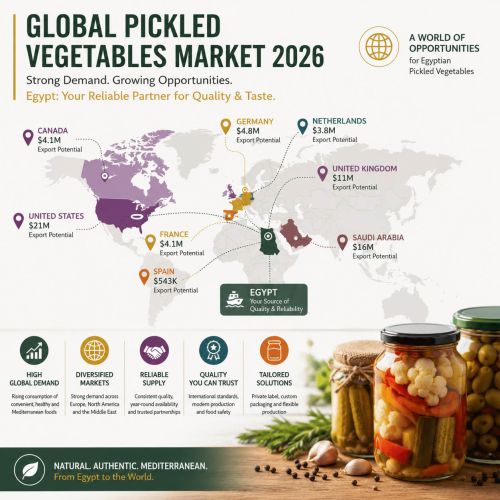
Egypt has become an important Mediterranean source of olives and pickled vegetables for international markets. Every year, large volumes of table olives, jalapeños, pickled peppers, and other vegetable products are exported from Egyptian producers to food distributors across Europe.
To reach these markets efficiently, many shipments enter Europe through major logistics gateways such as the Port of Rotterdam. As the largest port in Europe, Rotterdam plays a central role in connecting Mediterranean food exporters with European distribution networks.
For importers and distributors, this connection between Egyptian producers and European logistics hubs helps maintain efficient supply chains across the continent.
Egypt as a Growing Mediterranean Supplier
Thanks to its Mediterranean climate and expanding agricultural sector, Egypt has developed a strong position in the production of olives and pickled vegetables.
Egyptian food manufacturers supply a wide range of products including:
-
table olives
-
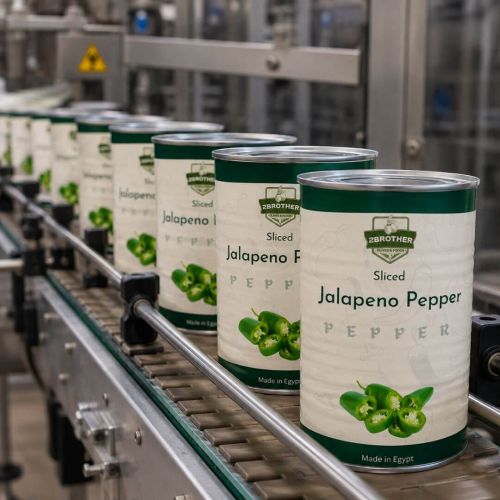
pickled jalapeños
-
pickled peppers
-
gherkins and cucumbers
-
mixed vegetable pickles
These products are widely used in retail food products, restaurant menus, and food manufacturing across Europe.
As demand for Mediterranean flavors continues to grow, Egyptian producers are becoming increasingly present in European food markets.
The Logistics Route: From Egypt to European Markets
Mediterranean food exports from Egypt typically travel through maritime routes across the Mediterranean Sea before reaching major European ports.
Once shipments arrive in Rotterdam, they can be transferred quickly to distribution centers and transported across the European Union.
This logistics flow helps ensure that olives and pickled vegetables move efficiently from Mediterranean producers to European retailers, distributors, and foodservice companies.
Why Rotterdam Is a Key Entry Point
The Port of Rotterdam is widely considered one of the most important food logistics hubs in Europe.
Its importance for Mediterranean food trade comes from several advantages:
-
high cargo handling capacity
-
efficient customs operations
-
advanced storage and logistics facilities
-
strong connections to European transport networks
These factors make Rotterdam an ideal entry point for companies involved in olive import in Europe and Mediterranean food distribution.
Distribution Across European Markets
After arriving in Rotterdam, imported food products can be distributed quickly to major European markets.
From the Netherlands, distributors can efficiently supply countries such as:
-
Germany
-
Belgium
-
France
-
Scandinavia
-
Central Europe
This connectivity has helped establish Rotterdam as a major food distribution hub in Europe, supporting the movement of Mediterranean food products across the continent.
Mediterranean Food Logistics and Supply Chains
Efficient logistics are essential for the trade of olives and pickled vegetables. Products must move through reliable supply chains that include transportation, storage, and distribution before reaching retailers and restaurants.
Logistics centers around Rotterdam play an important role in managing Mediterranean food logistics, allowing products from producers in countries like Egypt to reach European markets efficiently.
Conclusion
The growing demand for olives and pickled vegetables in Europe continues to strengthen trade connections between Mediterranean producers and European distributors.
Egyptian food manufacturers export a wide range of products to international markets, while logistics hubs such as Rotterdam help ensure efficient distribution across Europe.
Together, these supply chains support the movement of Mediterranean food products from farms and factories in Egypt to retailers and foodservice operators throughout the European market.
FAQ
Why are Egyptian olives exported to Europe?
Egypt produces large volumes of olives and pickled vegetables that are widely used in European food markets.
Why is Rotterdam important for olive imports in Europe?
Rotterdam is the largest port in Europe and serves as a key logistics hub for food distribution across the continent.
Which European markets can be reached from Rotterdam?
Germany, Belgium, France, Scandinavia, and several Central European countries.
What Mediterranean products are commonly imported into Europe?
Olives, pickled peppers, jalapeños, gherkins, and various vegetable pickles.