English
 العربية
 Español
 Deutsch
 Русский
 Italiana


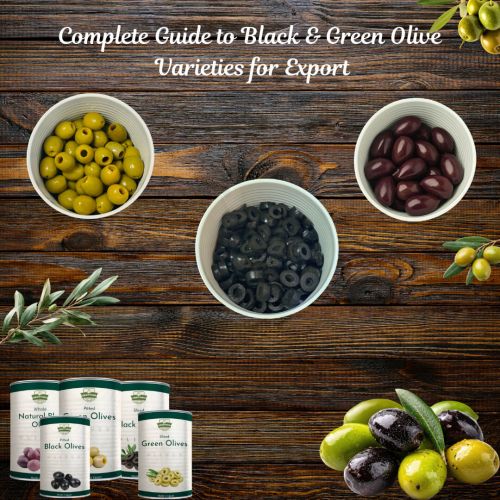
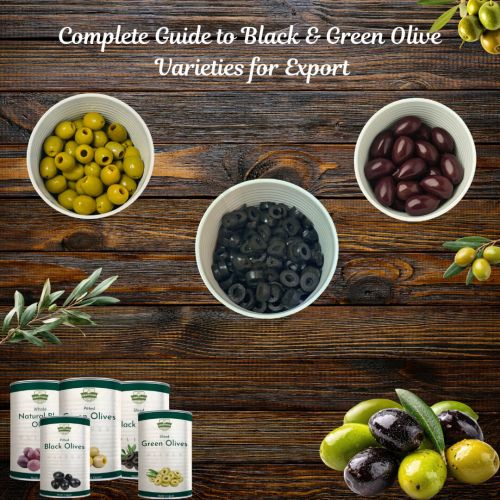
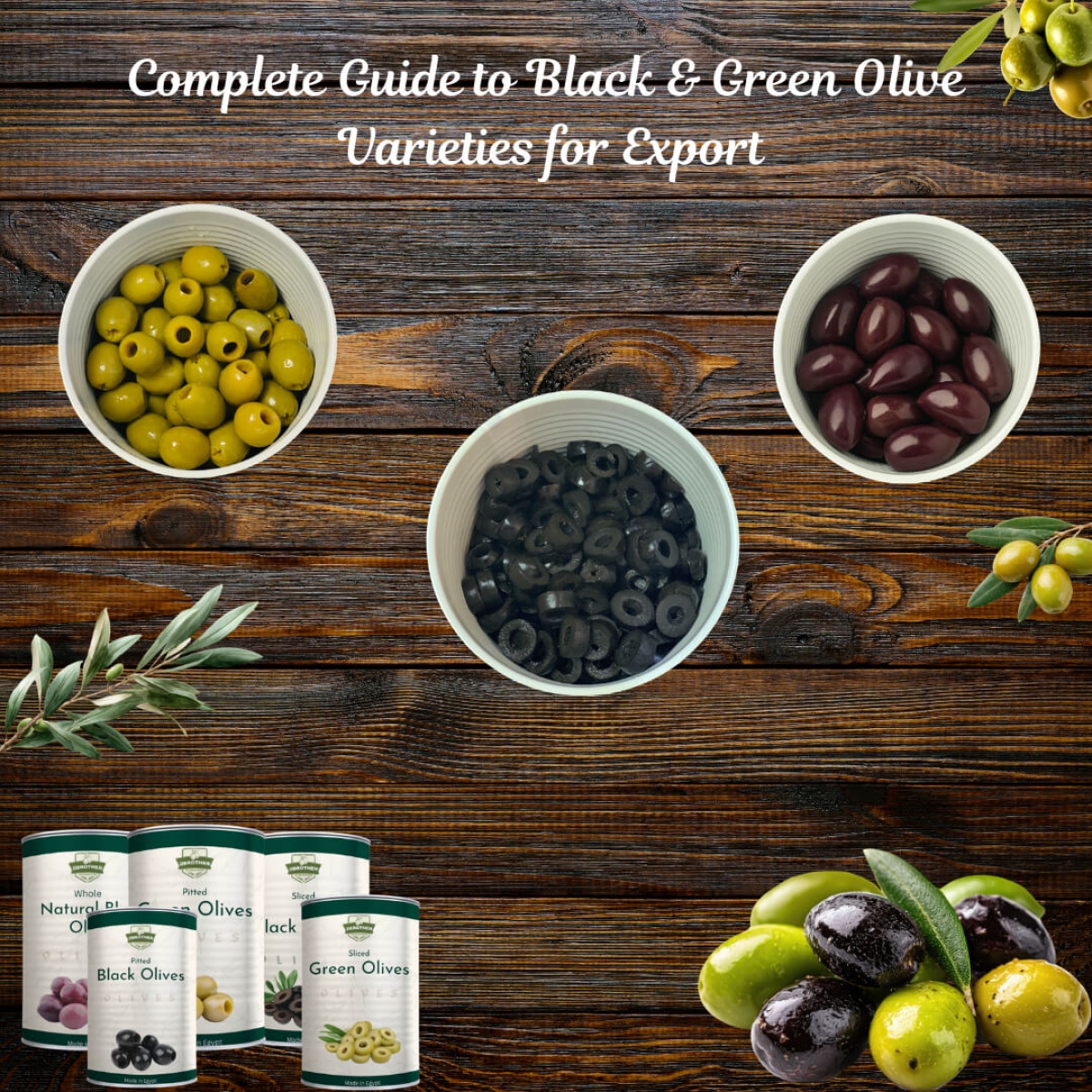
Complete Guide to Black & Green Olive Varieties for Export
Introduction
Global demand for Mediterranean olives continues to grow across retail, foodservice, and private label segments. For importers, wholesalers (Oliven Großhandel), and Lebensmittelimporteur partners, selecting the right olive variety is not only about taste — it is about consistency, sizing accuracy, processing method, EU compliance, and full traceability (Rückverfolgbarkeit).
This guide provides a structured overview of black and green olive varieties in international trade, including specifications relevant to European markets and global buyers.
1. What Is the Difference Between Green and Black Olives in Export Trade?
The primary difference is harvest stage, which directly affects texture, flavor, and processing method.
Green Olives
-
Harvested before full ripeness
-
Firmer texture
-
Mild to tangy flavor
-
Often lye-treated or naturally fermented
-
Popular in retail jars and private label programs
Black Olives
-
Harvested at full ripeness OR oxidized during processing
-
Softer texture
-
Richer or milder flavor (depending on method)
-
Common in sliced, pitted, and foodservice formats
In international trade, the distinction is also commercial:
Green olives dominate premium table olive (Tafeloliven) segments, while black olives are widely used in foodservice and industrial applications.
2. Which Olive Varieties Are Most Demanded in International Markets?
Below are key export varieties used in Europe and global markets:
Green Olive Varieties
Manzanilla
-
Medium size
-
Balanced flavor
-
Common in retail and private label
Hojiblanca
-
Firm texture
-
Slightly herbal notes
-
Suitable for slicing and stuffing
Gordal (Queen Olive)
-
Large caliber
-
Mild taste
-
Premium presentation
Black Olive Varieties
Kalamata
-
Almond-shaped
-
Fruity, wine-like profile
-
Strong presence in Mediterranean retail
Natural Black Olives
-
Tree-ripened
-
Dark brown to purple color
-
Preferred in clean-label segments
Oxidized Black Olives (California Style)
-
Uniform black color
-
Mild taste
-
Widely used in pizza chains and foodservice
These varieties are frequently sourced by European distributors, including German Tafeloliven buyers and international Oliven Großhandel operators.
3. Standard Olive Sizes in Export (Caliber Classification)
Size consistency is a critical purchasing factor.
Common export calibers (per kilogram):
-
201–230
-
231–260
-
261–290
-
291–320
-
321–350
Retail buyers typically prefer mid-range sizes (231–290), while foodservice may prioritize cost-efficient smaller calibers.
Precise grading and uniformity are essential for long-term contracts.
4. Olive Processing Methods in International Trade
Processing method directly affects flavor profile, shelf life, and labeling.
Lye-Treated (Spanish Style)
-
Faster debittering
-
Consistent texture
-
Controlled fermentation
Naturally Fermented
-
Longer curing period
-
Deeper flavor complexity
-
Increasing demand in premium EU markets
Oxidation Process
-
Used for uniform black color
-
Stable and mild taste
-
Common in sliced and canned formats
For EU markets, compliance with Lebensmittelstandards and transparent additive declaration is mandatory.
5. Quality & Compliance Requirements for EU and Global Export
Professional buyers evaluate suppliers based on:
-
HACCP-based production systems
-
ISO / food safety certifications
-
EU Food Law compliance
-
Pesticide residue monitoring
-
Batch-level Rückverfolgbarkeit
-
Controlled brine concentration
-
Standardized pH levels
Export-ready olives must combine agricultural quality with industrial process control.
6. Packaging Formats for Retail, Foodservice & Private Label
Export packaging typically includes:
Retail:
-
Glass jars
-
Easy-open tins
-
Vacuum pouches
Foodservice:
-
Large cans
-
Gallon jars
-
Bulk drums
Private Label:
-
Customized labeling
-
Multilingual compliance
-
Barcode integration
-
Nutritional alignment with EU regulation
Flexible production capability is critical for international partners.
7. Frequently Asked Questions (FAQ)
Which olive variety is most suitable for private label programs?
Manzanilla and Hojiblanca are widely used due to stable supply, consistent sizing, and balanced flavor profiles.
What olive size is most popular in European retail?
Caliber 231–260 and 261–290 are commonly preferred for glass jar retail segments.
Are oxidized black olives natural?
They are processed using controlled oxidation to achieve uniform color, widely accepted in foodservice applications.
What is the average shelf life of brined olives?
Typically 24–36 months, depending on processing method and packaging format.
What quality documentation is required for EU import?
Health certificate, certificate of origin, residue analysis, and full traceability documentation.
8. Export-Oriented Production Approach
In structured export operations, olive processing must integrate:
-
Agricultural sourcing control
-
Standardized fermentation monitoring
-
Laboratory-tested brine parameters
-
Automated sorting & grading
-
Documentation transparency
At 2brother, olive production combines Mediterranean agricultural heritage with process-oriented quality management aligned with international export standards — serving retail chains, foodservice operators, and private label partners worldwide.
Conclusion
Exporting black and green olives successfully requires more than product availability. It requires:
-
Variety knowledge
-
Size precision
-
Process control
-
EU compliance
-
Reliable supply continuity
Understanding these variables enables buyers to select the right olive profile for their specific market segment — whether retail, wholesale, or foodservice.